Receiving a third-party discovery demand is an operational emergency that threatens your company’s internal data, executive time, and market position. When your enterprise is caught in the crossfire of someone else’s lawsuit, failing to respond correctly can lead to court sanctions or the accidental disclosure of proprietary trade secrets. For corporate operators and executive teams, executing a strategic defense against a santa monica business subpoena is critical to protecting corporate data and operational workflows.
When your entity is served a subpoena duces tecum california business records, it is not a mere request for paperwork. It is a formal court order demanding the production of documents, emails, financial records, or deposition testimony. Navigating this complex process requires partnering with top Santa Monica law firms and retaining a seasoned santa monica civil litigation lawyer subpoena defense advocate who understands how to minimize business disruption while building an ironclad shield around your corporate data.
Objecting vs. Moving to Quash
When you are served third party subpoena business records santa monica, your entity cannot simply ignore the deadline. You have two primary procedural pathways to prevent unlawful data exposure: serving formal written objections or filing an affirmative motion in court. Understanding the strategic tradeoffs and the strict statutory time limit to respond to santa monica business subpoena demands is critical to protecting your business.
Serving Formal Written Objections
For a standard deposition subpoena for business records only, objecting to a business subpoena california procedure allows your defense counsel to serve a formal, verified list of objections directly on the issuing party.
- The Deadline: This must typically be served within 20 days after issuance of the subpoena, or at least 5 days before the production date, whichever is earlier.
- The Strategic Benefit: Once formal objections are served, the burden shifts entirely to the issuing party. They cannot obtain the records without filing a Motion to Compel in court, giving your executive team crucial leverage and breathing room.
- Core Grounds for Objection: Your counsel will craft objections based on overbreadth, lack of relevance, undue burden, and violations of corporate privacy rights or attorney-client privilege.
Filing a Motion to Quash or Modify
If the subpoena demands physical compliance or an enforcement risk is imminent, your corporate defense team must take affirmative action by filing discovery objections main street courthouse santa monica via a formal Motion to Quash.
- The Deadline: A motion to quash subpoena business records california must be filed and served before the date specified for production or deposition.
- The Strategic Benefit: This completely stays your obligation to comply until a judge rules on the matter. It allows your enterprise to demand the court narrow the scope of the discovery or issue a strict protective order to shield your proprietary information from the public record.
Strategy Breakdown | Written Objections Compared to Motion to Quash
Formal Written Objections
- Primary Use Case: Best for standard third party business records subpoena california production demands.
- Statutory Deadline: Earlier of 20 days from issuance or 5 days before production.
- Operational Cost: Lower initial cost; shifts the litigation burden and expense to the issuing party.
- Court Intervention: None required initially; waits for the issuing party to file a Motion to Compel.
Motion to Quash or Modify
- Primary Use Case: Necessary for personal deposition appearances, or when an aggressive, proactive court shield is required.
- Statutory Deadline: Must be filed and served prior to the scheduled date of production or appearance.
- Operational Cost: Higher initial cost; requires formal motion practice, legal drafting, and a court appearance.
- Court Intervention: Immediate; proactively places the dispute in front of a judge to seek a protective order.
Local Courthouse Logistics: Navigating the West District
f your corporate headquarters, registered agent, or data repositories are located on the Westside, your subpoena defense strategy will center on the local state court infrastructure. Effectively executing a motion to quash business records subpoena santa monica courthouse requires deep familiarity with the distinct operational traits of the West District.
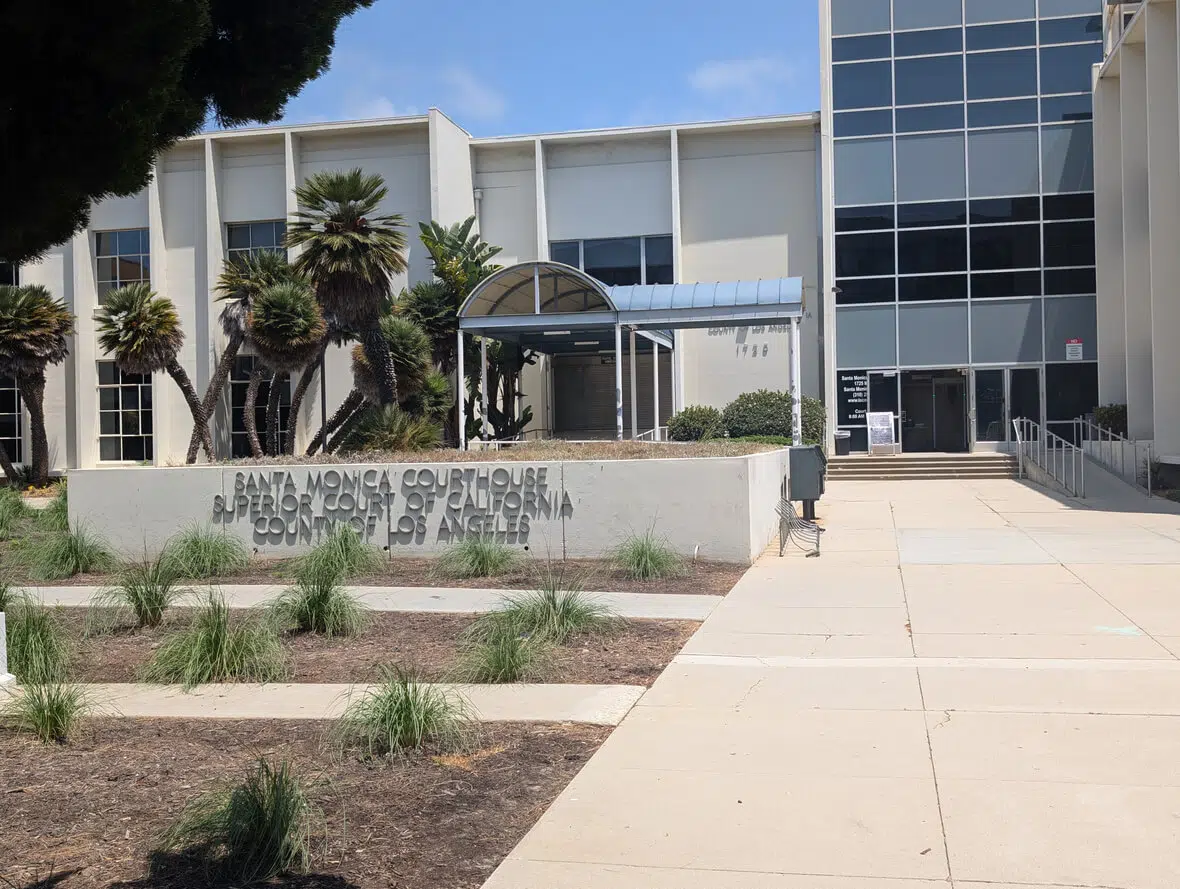
When coordinating your defense, logistics must be routed directly to the Santa Monica courthouse on main street located at 1725 Main Street, Santa Monica, CA 90401. If your operations team needs to verify a specific scheduling window, confirm a dynamic motion calendar, or locate the filing window, confirming these details directly with the West District civil clerk’s office keeps your case timeline secure. For businesses seeking the exact coordinates for courier deliveries or formal service, verifying the precise Santa Monica court address ensures your cross-motions are filed without procedural delays.
While the West District handles a high volume of civil actions, having a prominent santa monica civil defense lawyer ensures your filings are processed with the absolute precision needed to avoid compliance failures. Working with established lawyers in santa monica california protects your brand from the administrative pitfalls of the local court system.
Sector-Specific Vulnerabilities Across Santa Monica Business Hubs
Corporate data risks are not uniform. Depending on your industry and location within the Westside, your business faces distinct third-party discovery threats that dictate how to object to a subpoena duces tecum santa monica.
Silicon Beach Technology & Venture Ecosystems
Startups, SaaS providers, and digital media platforms face severe exposure when served with discovery demands. Litigants frequently use third-party subpoenas as a predatory fishing expedition to uncover proprietary source code, algorithmic logic, capitalization tables, or user engagement metrics. Protecting this intellectual property requires immediate, aggressive motion practice to secure highly restrictive protective orders before a single byte of data leaves your servers.
Main Street & Retail Hubs
For high-volume consumer businesses, third-party subpoenas typically target vendor pricing arrangements, commercial lease structures, localized payroll records, and point-of-sale consumer financial data. If your retail enterprise is caught in a dispute between a distributor and a competitor, failing to object properly can expose your profit margins and supply chain strategies to the open market.
Professional Corporations & Boutique Practices
Medical, legal, and financial corporations operating on the Westside are bound by strict statutory confidentiality frameworks. Receiving a subpoena for consumer or patient files places the business at direct risk of violating state privacy laws. In these sectors, filing meticulous, timely objections is a regulatory necessity to prevent massive third-party civil liability.
Secure Your Corporate Shield Immediately
Do not allow an external lawsuit to disrupt your operations, compromise your proprietary data, or expose your executive team to unnecessary deposition scrutiny. If your enterprise has been served with a discovery demand, immediate action is required to preserve your right to object and protect your corporate assets.
Contact Law Advocate Group, LLP at (310) 651-3065 for an elite, immediate document review. Our veteran corporate defense team and attorneys Santa Monica ca will analyze the demand, establish your statutory shield, and protect your commercial enterprise from unlawful exposure
Information on this website was written by LAW ADVOCATE GROUP, LLP as advertising material and is intended for general information purposes only. Nothing on this site should be taken as legal advice for any individual case or situation. This information is not intended to create, and receipt or viewing does not constitute, an attorney-client relationship.